
Everything related to the Aeroyantra cloud platform, browser tools, and commercial plans.
Explore specialized workflows for mining, construction, infrastructure, energy, and enterprise sectors.
Browse service lines by output type, project environment, and delivery requirement.
Read the material that supports evaluation, project planning, and field execution.
Drone Surveillance for Solar, Oil & Gas, and Industrial Sites - Night Thermal Patrols
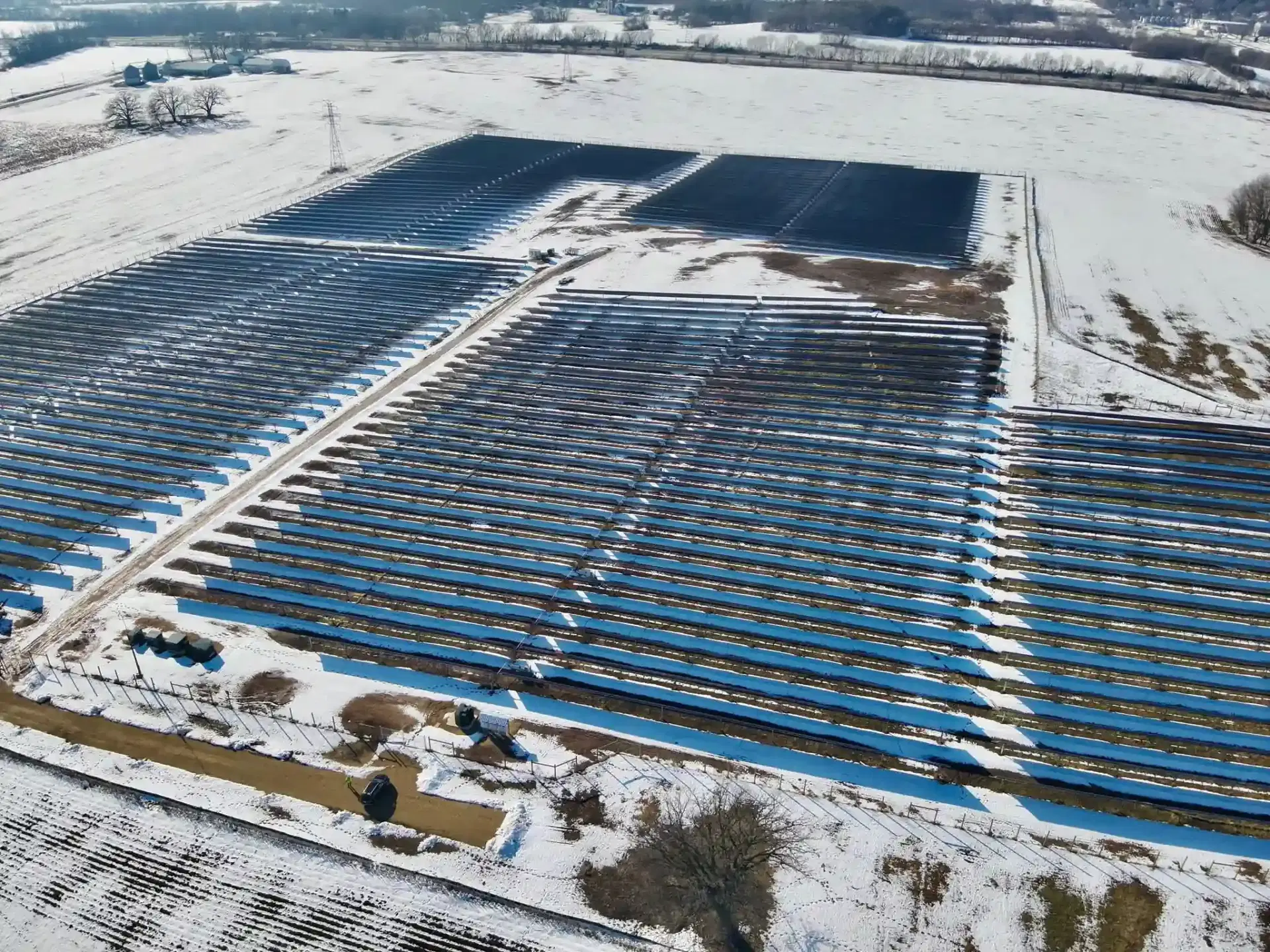
Most theft on a large Indian site happens at night, beyond the reach of perimeter lighting and in the gaps between fixed cameras. Thermal detects heat rather than light, so a person or vehicle stands out against cool ground whether the area is lit or not. Our DGCA-certified teams run scheduled night patrol sorties with thermal and RGB payloads across solar plants, oil and gas facilities, and industrial compounds - escalating detections live with a grid location, and closing each shift with a time-stamped evidence log.
Why thermal, and why at night
The loss happens in the dark, past the floodlights, in the gaps between cameras
Thermal Sees What Lights Do Not
A thermal sensor detects heat, not illumination, so a person or a running vehicle stands out against cool ground whether the area is lit or not. Beyond the reach of perimeter floodlights - which is exactly where theft happens - thermal is the only payload that works.
One Aircraft Covers What Cameras Cannot
A utility-scale solar plant has kilometres of perimeter and millions of square metres of module area. Fixed CCTV leaves gaps between poles and cannot see between array rows. A single patrol sortie covers the full footprint from above.
Scheduled Sorties Across the Night
In practice round-the-clock cover means repeated patrol sorties through the night window, not one continuous flight - battery endurance rules that out. Randomised timing matters more than constant presence, because a predictable patrol is one that can simply be waited out.
Evidence, Not Just an Alert
Every sortie records geo-tagged thermal and RGB footage with a timestamp. When something is found you have the location, the time and the imagery - which is what an FIR or an insurance claim needs, and what a guard's verbal report cannot provide.
Where it is used in India
Solar, oil and gas, and heavy industry - where the asset is portable and the boundary is long
Solar Plant Surveillance and Theft Prevention
Utility-scale solar is the clearest case for night drone patrols in India. Sites run to hundreds of hectares of open ground holding high-value, easily removed hardware - modules, DC cabling, inverter components - behind a perimeter far too long for fixed cameras to cover without gaps. Thermal patrols pick up people and vehicles between array rows and beyond the floodlit apron, where CCTV has no view and a ground guard arrives late.
- Module and DC cable theft detection
- Inverter and transformer yard perimeter
- Between-row coverage fixed CCTV cannot reach
- Thermal module hotspot flagging as a by-product
- Soiling and vegetation assessment on daylight passes
Oil and Gas Facility and Pipeline Surveillance
Tank farms, terminals, and pipeline right-of-way carry both a theft exposure and a safety case. Night thermal patrols detect unauthorised approach, tapping activity, and vehicle movement along the corridor while keeping the aircraft at a safe standoff from process equipment. Flights are planned around facility clearance and hot-work restrictions rather than treated as open airspace.
- Illegal tapping and pilferage detection
- Tank farm and terminal perimeter patrols
- Pipeline ROW encroachment and construction
- Safe thermal standoff from process equipment
- Operator clearance handled as part of the programme
Industrial Plant and Scrap Yard Monitoring
Steel plants, cement works, and manufacturing compounds lose material after shift hours - scrap, metal stock, spares, fuel. Boundaries are long, often partly unfenced, and cross terrain that ground patrol covers slowly. A patrol sortie covers the compound and its approaches in a single flight, and the recorded footage makes a loss traceable rather than something noticed at stock-take.
- Scrap and material removal after hours
- Compound perimeter and gate approaches
- Yard stock movement between passes
- Unauthorised vehicle access routes
- Evidence pack for internal investigation
Daylight Monitoring and Change Records
Alongside night patrols, scheduled daylight passes build a dated record of the site. Each pass produces a geo-referenced orthomosaic in the same coordinate frame as the last, so encroachment, new construction in a corridor, and material movement are measurable rather than remembered. This is the layer that supports notices, enforcement, and progress reporting.
- Date-stamped orthomosaic each cycle
- Change comparison against the previous pass
- Encroachment with a location and a date
- Volume change on stockpiles
- Findings carried forward between cycles
Night Patrols for Your Site
Tell us the site type, the boundary length, and the losses you are seeing. We assess whether night thermal patrols fit and send a written quote with sortie count and clearance position.
What You Receive
Per shift for night patrols, per cycle for daylight monitoring passes.
- Night thermal and RGB patrol footage, geo-tagged and time-stamped
- Incident log with location, timestamp, and supporting frames
- Perimeter breach and intrusion findings
- Date-stamped orthomosaic for daylight monitoring cycles
- Change comparison against the previous pass
- Encroachment and boundary-breach mapping
- Material and stockpile movement records
- Evidence pack formatted for FIR or insurance submission
- GeoTIFF, MP4, KML, CSV, and PDF formats
When drone surveillance is the right call
Where the boundary is long, the asset is portable, and CCTV leaves gaps
| Situation | What it addresses |
|---|---|
| Solar plant, night hours | Module, DC cable, and inverter component theft across a large open site |
| Oil and gas facility perimeter | Fuel pilferage, illegal tapping, and unauthorised approach to installations |
| Industrial plant and scrap yard | Scrap and metal removal after shift hours, boundary breaches |
| Transmission line and pipeline ROW | Conductor theft, encroachment, and illegal construction in the corridor |
| Construction site, off hours | Material, rebar, and fuel theft when the site is unmanned |
| Mine lease and dump areas | Unauthorised extraction and material movement outside working hours |
| Long or partly unfenced boundaries | Perimeter that ground patrol covers slowly and CCTV cannot cover at all |
Drone patrols protect your own site, perimeter, and assets. We do not undertake covert monitoring of individuals, and night operations are flown only with the DGCA permissions night flight requires plus any clearance the facility itself needs.
How a surveillance programme runs
From threat mapping to an evidence pack that holds up outside your office
Site Assessment and Threat Mapping
We walk the perimeter with your security team to find where losses actually occur - unlit stretches, weak boundary, approach routes, blind spots between existing cameras. The patrol pattern is built around those, not around the site outline.
Airspace and Night Permissions
Night operations are filed under Drone Rules 2021 with the conditions night flight requires, and facility-specific clearance is arranged where the site is a restricted installation such as a refinery or terminal. Handled as part of the programme.
Baseline and Patrol Plan
A daylight baseline survey fixes the coordinate frame and the flight plan for recurring passes. The night plan sets sortie count, timing windows, and thermal settings, with timing randomised so the pattern cannot be waited out.
Patrol Operations and Escalation
Sorties run across the night window with thermal and RGB recording. Detections are escalated to your control room or security supervisor in real time with a grid location, so a ground team can respond while the aircraft holds overwatch.
Incident Log and Evidence Pack
Each shift closes with an incident log - location, timestamp, thermal and RGB frames. Where an incident needs to go further, the footage is packaged for an FIR or an insurance claim rather than handed over as raw files.
Frequently Asked Questions
Common questions about drone surveillance and night patrols in India
Yes, and this is the main reason Indian sites use drone surveillance. A thermal payload detects heat rather than light, so a person or a running vehicle stands out against cool ground whether the area is floodlit or completely dark. That matters because theft happens beyond the lit apron and in the gaps between fixed cameras. Aeroyantra runs scheduled night patrol sorties with thermal and RGB, escalating detections to your control room with a grid location while the aircraft holds overwatch.
Yes, with permissions. Night operations are permitted under Drone Rules 2021 subject to the conditions night flight requires, and Aeroyantra files for every sortie through Digital Sky with DGCA Remote Pilot Licence holders operating. Restricted installations such as refineries and terminals need facility clearance in addition to airspace approval, and we arrange that as part of the programme rather than leaving it with your team.
Not as one continuous flight - battery endurance makes that impossible, and any provider claiming otherwise is describing a tethered or docked system rather than a patrol drone. What Aeroyantra runs is repeated patrol sorties across the night window with randomised timing, which in practice covers the hours when losses occur. Randomised timing matters more than constant presence, because a predictable patrol is one that can simply be waited out.
A utility-scale solar plant has kilometres of perimeter and millions of square metres of module area, and fixed CCTV leaves gaps between poles while seeing nothing between array rows. A single drone patrol sortie covers the full footprint from above, including the between-row space where module and DC cable theft actually takes place. Drone patrols complement CCTV on the gates and inverter yard rather than replacing it.
The heaviest users are utility-scale solar plants, oil and gas facilities including tank farms and pipeline right-of-way, and industrial plants and scrap yards. What they share is a long or partly unfenced boundary, high-value portable assets such as modules, cabling, fuel and scrap, and losses concentrated in the hours when the site is unmanned. Transmission corridors, mine leases, and unmanned construction sites follow for the same reasons.
Each shift closes with an incident log giving the location, timestamp, and supporting thermal and RGB frames for anything found. Where an incident needs to go further, Aeroyantra packages the footage in a form suitable for an FIR or an insurance claim rather than handing over raw files. That record is the practical difference from a guard's verbal report, which cannot establish when something happened or exactly where.
Inspection asks what condition an asset is in right now and is usually a one-off flown close to the structure. Surveillance is repeated flight of the same site to detect intrusion, theft, or change since the last pass. Aeroyantra delivers both, and they are priced differently: inspection per survey, surveillance per patrol shift or per monitoring cycle, because its value comes from the repetition rather than any single flight.
Yes. Alongside night patrols, scheduled daylight passes produce a geo-referenced orthomosaic in the same coordinate frame each cycle, so encroachment on right-of-way, illegal construction, and material movement are measurable rather than remembered. Aeroyantra achieves 2-5 cm accuracy on these datasets, which is enough to establish whether a structure sits inside or outside a boundary - the question that matters for a notice or an enforcement action.
Drone Surveillance Quote - Response in 2 Hours
Share the site type, boundary length, and the losses you are seeing. We confirm the patrol plan, sortie count, night clearance position, and a written price within 2 hours. DGCA-certified night operations across all major industrial belts in India.