
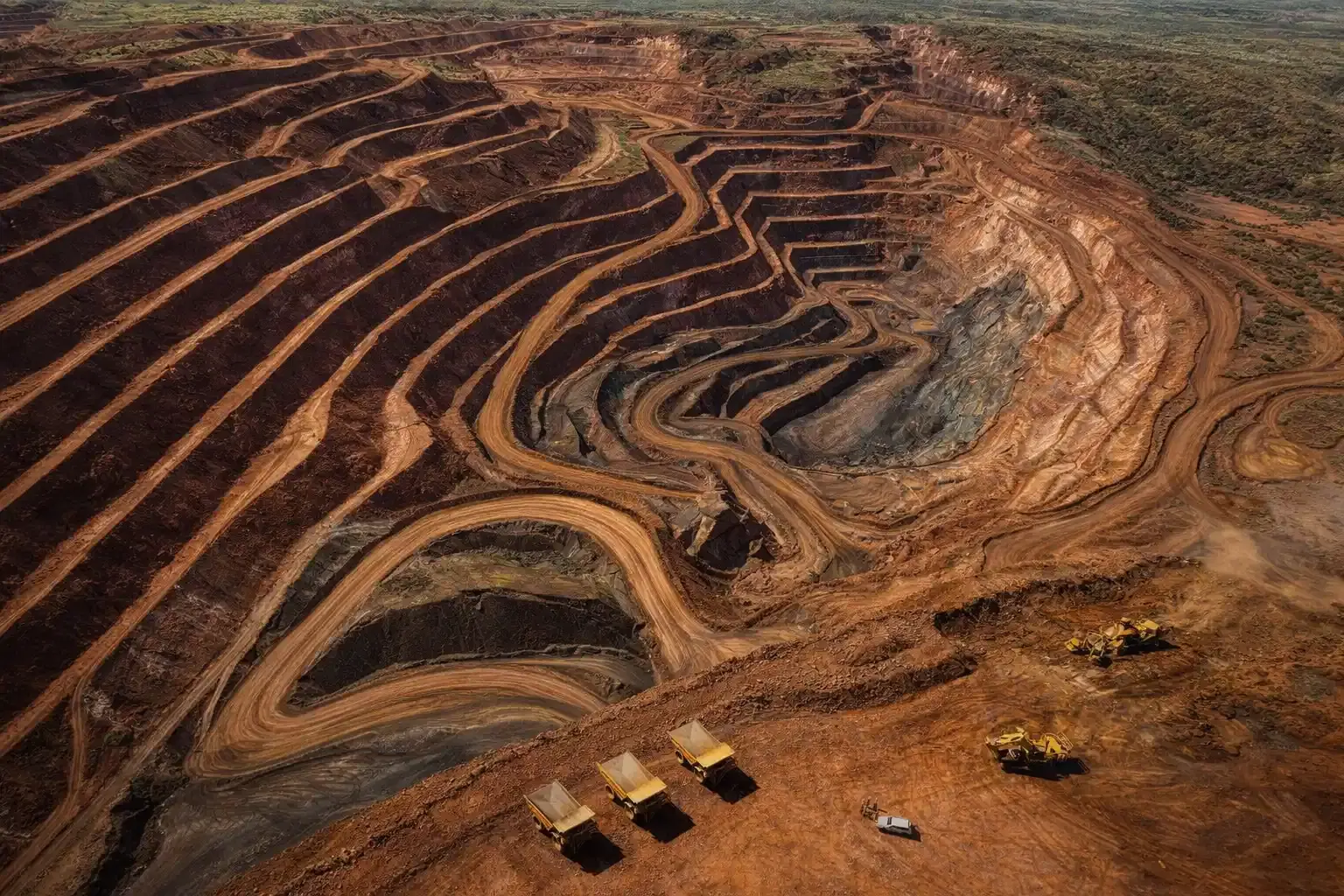
Drone Survey for Mining | Stockpile & Compliance
Drone mapping for mining and quarrying. IBM Rule 34A and DGMS compliant. Stockpile volumes, pit progression, LiDAR survey, and 48-hour delivery.
Drone Survey for Mining | Stockpile & Compliance
Drone mapping for mining and quarrying. IBM Rule 34A and DGMS compliant. Stockpile volumes, pit progression, LiDAR survey, and 48-hour delivery.
Table Of Content
- Mining & Quarrying Drone Mapping and Aerial Survey: Mine Site Data That Keeps Up With Your Operations
- Why Traditional Mine Surveys Cannot Keep Up With Modern Mining Operations
- Survey-Grade Drone Mapping and UAV Mapping Services Across Every Critical Mining Measurement
- Stockpile Volume Measurement: Replace Estimates With Measurements Your Finance Team Can Stand Behind
- Pit Progression Tracking: Track Every Meter of Pit Advancement
- Bench Geometry and Slope Monitoring with Drone Surveying and Mapping: Verify Against Design Before Geotechnical Problems Develop
- Overburden and Dump Volume Tracking: Track Every Cubic Meter From Pit to Dump
- LiDAR Survey and Drone Lidar Mapping for Mining Surveys: Precision Where Photogrammetry Has Limits
- Haul Road Condition Monitoring for Mining Operations
- Mining Compliance Documentation
- Thermal Drone Monitoring for Spontaneous Combustion and Environmental Compliance
- Complete Deliverables by Operational Need
- Who Uses Aeroyantra for Mining and Quarrying Operations
- Frequently Asked Questions
- Ready to Get Started?
Mining & Quarrying Drone Mapping and Aerial Survey: Mine Site Data That Keeps Up With Your Operations
Mining sites change every shift. Benches advance, stockpiles grow and shrink, haul roads deteriorate, and pit geometry evolves faster than traditional survey cycles can track. When your survey data is a week old, your planning decisions are a week behind.
Aeroyantra is a mining and quarrying drone mapping platform that combines photogrammetry and LiDAR survey to deliver survey-grade volume measurement, pit progression tracking, and compliance-ready datasets. Aeroyantra delivers survey-grade drone surveying and mapping and LiDAR for mining and quarrying operations - stockpile volume measurement, pit progression tracking, bench and haul road analysis, overburden monitoring, and compliance documentation generated from aerial survey data that is current, accurate, and defensible using our drone mapping services and aerial mapping software.
Why Traditional Mine Surveys Cannot Keep Up With Modern Mining Operations
Mining and quarrying operations produce data problems that compound daily. Ground-based survey teams working in active pits face access restrictions, safety exposure, and measurement inconsistency. The result is survey data that arrives too late, covers too little, and is disputed too often.
The pattern repeats across mining operations of every scale:
-
Stockpile volumes are estimated, not measured - Compaction factor assumptions and manual tape measurements introduce variance of 10-20%, creating inventory disputes between operations, finance, and offtake teams
-
Survey personnel are exposed to unnecessary risk - Ground crews working in active blast zones, on unstable bench faces, and near heavy equipment face hazards that drone surveys eliminate entirely
-
Pit progression data arrives after decisions are made - Weekly or fortnightly survey cycles mean planning decisions are made on data that no longer reflects current conditions
-
Bench geometry deviations go undetected - Slope angles, bench widths, and crest positions that deviate from design go unmeasured until they create geotechnical or compliance problems
-
Haul road condition is assessed subjectively - Without consistent aerial monitoring, haul road deterioration is identified reactively after equipment damage or productivity loss
-
Compliance documentation is assembled reactively - Volume records, bench geometry data, and environmental monitoring reports are assembled from incomplete field records
-
Overburden tracking is inaccurate - Without measured surface models, overburden movement and dump volume tracking relies on truck counts and compaction assumptions that do not hold up to audit
The problem is not a lack of operational effort. It is a fundamental limitation of ground-level survey methods in an environment that changes faster than ground crews can measure it.
Don't have a drone team?
Our DGCA-certified pilots survey your mine or quarry and deliver results in 48 hours - no equipment, no software required.
Survey-Grade Drone Mapping and UAV Mapping Services Across Every Critical Mining Measurement
Aeroyantra delivers drone mapping and LiDAR survey workflows that produce engineering-grade outputs for mining and quarrying operations - from weekly stockpile measurement to full pit progression tracking and regulatory compliance documentation using aerial survey drone technology.
With RTK drone mapping, PPK, and GCP-supported workflows, Aeroyantra achieves 2-3 cm horizontal accuracy and vertical precision suitable for volume calculation, bench geometry verification, and regulatory reporting across open-cast mines and quarries of any scale. Our drone surveying and mapping services provide comprehensive aerial photogrammetry, topographical survey, and drone 3d mapping solutions with GIS mapping compatible outputs.
What that means for mining operations:
-
Accurate stockpile volumes - Measured from aerial surface models using drone mapping software, not estimated from compaction factors or truck counts
-
Current pit geometry - Weekly or fortnightly pit progression data that reflects conditions as they are, not as they were, using aerial drone survey
-
Personnel safety preserved - All survey data collected from drone altitude using drones for surveying and mapping - no ground access to active blast zones or unstable faces required
-
Bench geometry verified - Slope angles, bench widths, and crest positions measured against design at every survey cycle with drone survey mapping
-
Compliance-ready documentation - Georeferenced, time-stamped records formatted for regulatory requirements using aerial mapping drone technology
-
Haul road condition tracked - Consistent aerial monitoring of haul road surface condition and gradient for maintenance planning with drone lidar mapping
Stockpile Volume Measurement: Replace Estimates With Measurements Your Finance Team Can Stand Behind
Stockpile measurement is the highest-frequency, highest-stakes survey task in mining operations. Inventory figures that are wrong by 10-15% create disputes between operations and finance, undermine offtake agreements, and produce write-downs that appear without warning at month-end.
This turns drone surveys into a reliable stockpile volume measurement system instead of an estimation workflow. Aeroyantra replaces estimation with measurement. Each drone survey produces a Digital Surface Model of every stockpile on site, compared against a baseline to produce accurate, defensible volume data - for every pile, in a single flight.
What Aeroyantra delivers for stockpile measurement:
-
Total stockpile volume - Quantified volume of each stockpile derived from surface model comparison against the stockpile base, calculated to within 1-2% accuracy
-
Multi-material inventory - Separate volume calculations for ROM ore, crushed product, overburden, waste rock, and any other stockpile type on site
-
Tonnage reconciliation - Volume data combined with material density factors to reconcile measured volumes against weighbridge and truck count records
-
Stockpile shape and geometry - Precise mapping of stockpile footprints, heights, and slope angles for safety and operational planning
-
Inventory change between cycles - Incremental volume change between survey cycles for production reconciliation and dispatch tracking
-
Time-series inventory archive - Complete chronological record of stockpile volumes across the operation for audit and reporting
-
Multi-site inventory - Single platform access to stockpile data across multiple mine or quarry sites for group-level inventory management
Technical Performance:
| Parameter | Specification |
|---|---|
| Georeferencing | RTK, PPK, GCP-supported |
| Horizontal accuracy | 2-3 cm under proper survey standards |
| Vertical accuracy | Suitable for volume and inventory calculation |
| Volume accuracy | Within 1-2% for well-defined stockpile areas |
| Survey frequency | Weekly, fortnightly, or monthly - configurable |
| Output formats | GeoTIFF, LAS, DXF, SHP, PDF, CSV - GIS compatible |
Pit Progression Tracking: Track Every Meter of Pit Advancement
Pit progression data that is a week old is a week's worth of decisions made on the wrong information. Aeroyantra delivers current pit geometry at the frequency your operations require - weekly, fortnightly, or tied to blast cycles - giving planning and engineering teams data that reflects conditions as they are.
What Aeroyantra delivers for pit progression tracking:
-
Current pit geometry - Complete 3D surface model of the active pit updated at every survey cycle, showing bench positions, pit floor elevation, and working face geometry
-
Excavation volume quantification - Volume of material removed between survey cycles, reconciled against blast design and truck dispatch records
-
Design-to-actual pit comparison - Current pit geometry compared against mine design to identify areas ahead of or behind plan, and sections deviating from permitted pit limits
-
Pit floor elevation mapping - Precise elevation mapping of the pit floor for dewatering planning, equipment positioning, and grade control
-
Working face advance measurement - Quantified face advance between survey cycles by bench and by sector, for production reporting and planning
-
Blast pattern verification - Pre-blast and post-blast surface comparison to quantify material movement and verify blast performance against design
-
Sump and dewatering monitoring - Identification and profiling of water accumulation in the pit for dewatering planning and pump positioning
Bench Geometry and Slope Monitoring with Drone Surveying and Mapping: Verify Against Design Before Geotechnical Problems Develop
Bench slope angles, bench widths, and crest positions that deviate from design are not just a compliance problem - they are a geotechnical risk. Catch-benches that are too narrow, slopes that are too steep, and crests that have been mined beyond permitted limits create instability that develops gradually and fails suddenly.
Bench geometry and slope monitoring from drone mapping and LiDAR survey data provides a continuous geotechnical safety layer across the pit using aerial survey drone technology and drone lidar mapping. Aeroyantra measures bench geometry at every survey cycle using our drone mapping services and aerial photogrammetry, giving geotechnical and mining engineering teams the data they need to identify deviations before they become failures.
What Aeroyantra delivers for bench and slope monitoring:
-
Bench face slope angle measurement - Precise slope angles measured from the 3D surface model using drone 3d mapping at user-defined intervals along each bench face
-
Bench width verification - Measured catch-bench and working bench widths compared against design parameters with aerial mapping drone
-
Crest and toe position mapping - Georeferenced crest and toe positions for each bench using drone survey mapping, enabling comparison against permitted limits and design
-
Inter-ramp and overall slope angle calculation - Overall slope angle measurement across multiple benches for geotechnical stability assessment with UAV mapping services
-
Slope deviation heatmap - Color-coded visualization of bench faces showing areas where slope angles deviate from design intent using drone mapping software
-
Time-series slope change detection - Repeat surveys registered to a common datum using aerial survey, enabling detection of slope movement, tension crack development, and bench degradation between monitoring cycles
-
Geotechnical monitoring support - Surface displacement data for geotechnical monitoring programs using aerial photogrammetry, supplementing prism and inclinometer data with spatial surface change information
Overburden and Dump Volume Tracking: Track Every Cubic Meter From Pit to Dump
Overburden management is one of the largest cost drivers in open-cast mining. Accurate tracking of overburden volumes - from excavation through haulage to dump placement - is essential for cost reconciliation, dump stability monitoring, and regulatory compliance.
Aeroyantra covers both the active pit and all overburden dump areas in a single survey flight, producing volume data for the full material movement cycle.
What Aeroyantra delivers for overburden and dump monitoring:
-
Overburden excavation volume - Quantified overburden removed from the pit between survey cycles, reconciled against blast design and truck dispatch
-
Dump progression tracking - Volume of material placed on each dump area between survey cycles, for cost reconciliation and capacity planning
-
Dump slope and stability monitoring - Slope angle measurement and time-series change detection on overburden dumps for geotechnical stability assessment
-
Dump capacity management - Remaining dump capacity calculation against permitted dump limits and design geometry
-
Dump face advance measurement - Quantified dump face advance for operational planning and regulatory reporting
-
Rehabilitation monitoring - Vegetation establishment and surface condition monitoring on rehabilitated dump areas for environmental compliance
LiDAR Survey and Drone Lidar Mapping for Mining Surveys: Precision Where Photogrammetry Has Limits
Open-cast mining environments present specific photogrammetric challenges: deep pit walls with shadow zones, near-vertical blast faces, dust and haze reducing image quality, and irregular waste rock surfaces where texture matching is unreliable. In these conditions, photogrammetry point clouds introduce errors that affect volume accuracy and bench geometry measurement.
Drone lidar mapping eliminates these limitations. Active scanning geometry captures accurate surface data regardless of shadow, surface texture, or atmospheric conditions using aerial survey drone technology and drone surveying and mapping - producing measurements you can defend in a regulatory audit or a contractor dispute with our drone mapping services and aerial mapping software.
What Aeroyantra Extracts from Mining LiDAR Surveys and UAV Mapping Services
-
High-accuracy pit surface model - Dense, accurate point cloud of the full pit using drone 3d mapping including deep walls, shadowed faces, and near-vertical blast faces that photogrammetry handles poorly
-
Bench geometry extraction - Precise crest and toe positions, slope angles, and bench widths extracted from classified point cloud data with aerial photogrammetry
-
Haul road surface condition - Millimeter-level road surface geometry for pothole detection, gradient analysis, and maintenance prioritization using drone survey mapping
-
Stockpile surface capture in dusty conditions - LiDAR captures accurate stockpile surfaces in high-dust environments where photogrammetry image quality is degraded with aerial mapping drone
-
Underground portal and decline mapping - LiDAR capture of portal geometry, decline profiles, and near-surface underground workings for safety and engineering documentation using drone mapping software
-
Drainage and sump mapping - Precise profiling of pit sumps, drainage channels, and water management infrastructure
-
Subsidence and surface movement detection - Time-series LiDAR comparison to detect surface subsidence, slope movement, and ground deformation above underground workings
-
Quarry face geometry - Precise capture of quarry face geometry, joint patterns, and blast hole collar positions for blast design support
Haul Road Condition Monitoring for Mining Operations
Haul road condition is one of the most directly measurable drivers of mining productivity and equipment operating cost. A deteriorating haul road increases tyre wear, fuel consumption, and cycle times - and creates safety risks for heavy equipment operators. Without consistent aerial monitoring, haul road condition is assessed subjectively and reactively.
Aeroyantra delivers consistent haul road condition data from every survey flight, covering the full haul road network alongside pit and stockpile data.
What Aeroyantra delivers for haul road monitoring:
-
Road surface condition mapping - High-resolution aerial imagery and LiDAR surface data identifying potholes, rutting, erosion, and surface deterioration across the haul road network
-
Gradient and cross-fall measurement - Precise road gradient and cross-fall measurement for drainage design and safety compliance
-
Road width verification - Measured carriageway widths compared against design parameters and regulatory requirements
-
Drainage condition assessment - Identification of drainage channel blockages, erosion, and water ponding on road surfaces
-
Maintenance prioritization - Georeferenced condition reports identifying sections requiring immediate intervention versus routine maintenance
-
Time-series deterioration tracking - Repeat surveys enabling measurement of road surface deterioration rates between maintenance cycles
Mining Compliance Documentation
Mining operations operate under regulatory oversight requiring accurate compliance documentation. Volume records, bench geometry data, environmental monitoring reports, and mine plan progress must be accurate, traceable, and available on demand.
All compliance documentation is generated from georeferenced, time-stamped mining drone survey data, making it defensible in regulatory audits. Aeroyantra produces compliance documentation from georeferenced, time-stamped aerial data captured throughout the operational cycle - giving operators records that are accurate, auditable, and ready for regulatory submission.
What Aeroyantra delivers for mining compliance:
-
Mine plan progress documentation - Quantified comparison of current pit geometry against approved mine plan for regulatory reporting
-
Bench geometry compliance records - Measured slope angles, bench widths, and crest positions compared against design standards
-
Volume compliance reports - Quantified extraction volumes by period, reconciled against approved mining lease limits
-
Environmental monitoring records - Georeferenced, time-stamped aerial records of rehabilitation areas, dust suppression coverage, and water management infrastructure
-
Overburden dump compliance - Measured dump volumes and slope angles compared against permitted dump design for regulatory reporting
-
Progressive rehabilitation documentation - Aerial monitoring of rehabilitation progress on mined-out areas for statutory compliance
-
Incident documentation - Rapid aerial assessment of slope failures, equipment incidents, and environmental events for regulatory notification and investigation support
Thermal Drone Monitoring for Spontaneous Combustion and Environmental Compliance
Spontaneous combustion in coal stockpiles and waste dumps is a serious operational and safety risk that is difficult to detect from ground level until it has already developed into a significant incident. Thermal drone surveys add a critical early detection layer to standard aerial monitoring.
What thermal monitoring delivers for mining operations:
-
Spontaneous combustion detection - Thermal anomalies in coal stockpiles and waste dumps indicating subsurface heating before visible smoke or flame
-
Hot spot mapping and monitoring - Georeferenced hot spot locations with temperature values for targeted intervention and monitoring
-
Active fire perimeter mapping - Precise thermal mapping of fire perimeters for emergency response coordination
-
Dust suppression effectiveness - Thermal contrast mapping to assess moisture distribution and dust suppression coverage effectiveness
-
Water body and tailings monitoring - Thermal mapping of process water ponds, tailings storage facilities, and drainage features for environmental monitoring
Complete Deliverables by Operational Need
| Deliverable | Stockpile | Pit Progression | Bench Geometry | Overburden | Compliance |
|---|---|---|---|---|---|
| High-res orthomosaic | ✓ | ✓ | ✓ | ✓ | ✓ |
| Digital Surface Model (DSM) | ✓ | ✓ | ✓ | ✓ | ✓ |
| Digital Terrain Model (DTM) | ✓ | ✓ | - | ✓ | ✓ |
| Stockpile volume report | ✓ | - | - | - | ✓ |
| Pit progression record | - | ✓ | - | - | ✓ |
| Excavation volume report | - | ✓ | - | ✓ | ✓ |
| Bench geometry report | - | - | ✓ | - | ✓ |
| Slope deviation heatmap | - | - | ✓ | ✓ | ✓ |
| LiDAR point cloud (LAS/LAZ) | ✓ | ✓ | ✓ | ✓ | ✓ |
| Haul road condition map | - | - | - | - | ✓ |
| Thermal hot spot report | ✓ | - | - | ✓ | ✓ |
| Compliance report package | - | - | - | - | ✓ |
| Time-series archive | ✓ | ✓ | ✓ | ✓ | ✓ |
| GIS and Civil 3D exports | ✓ | ✓ | ✓ | ✓ | ✓ |
Who Uses Aeroyantra for Mining and Quarrying Operations
Aeroyantra is used by mine managers, survey teams, geotechnical engineers, and compliance officers managing:
- Open-cast coal mining operations requiring regulatory oversight
- Metal and mineral open-cast mines requiring regular volume and geometry documentation
- Limestone, granite, and aggregate quarrying operations
- Iron ore and bauxite mining operations requiring bench and pit monitoring
- Sand and gravel extraction sites requiring volume tracking and compliance documentation
- Mine closure and rehabilitation programs requiring progressive monitoring
- Exploration and feasibility stage surveys for new mining leases
- Environmental consultants preparing mining compliance submissions
Frequently Asked Questions
Q1: How accurate is drone-based stockpile volume measurement compared to manual methods?
With RTK or PPK georeferencing, Aeroyantra achieves stockpile volume accuracy within 1-2% for well-defined stockpile areas. Manual estimation methods - compaction factor calculations and truck count multipliers - routinely introduce variance of 10-20% or more. For inventory reconciliation and offtake agreement purposes, drone-derived measurements are significantly more defensible because they are based on measured surface geometry rather than assumed factors.
Q2: Can drone surveys be conducted safely in active blast zones and near heavy equipment?
Yes, with appropriate operational planning. Drone surveys in active mining areas are conducted during scheduled survey windows - typically during shift changes, meal breaks, or planned blast clearance periods - when equipment is clear of the survey area. Survey personnel operate from safe standoff distances outside the active zone. All operations are planned in coordination with the mine's safety management system. Aeroyantra does not require personnel to enter active blast zones or work near moving heavy equipment.
Q3: How frequently should mining drone surveys be conducted?
Survey frequency depends on operational requirements. For stockpile inventory reconciliation, weekly or fortnightly surveys are standard. For pit progression tracking and production reporting, fortnightly to monthly surveys are typical. For bench geometry compliance monitoring, monthly surveys are generally sufficient. For geotechnical monitoring in areas of concern, weekly surveys may be required. Aeroyantra supports any survey frequency from daily to quarterly.
Q4: Can Aeroyantra produce documentation for regulatory compliance requirements?
Yes. Aeroyantra produces georeferenced, time-stamped volume reports, bench geometry records, and condition assessments with all data traceable to the aerial survey source. Report formatting can be configured to match the documentation standards required by regulatory authorities. We recommend confirming specific format requirements with your mine's compliance team before the first survey cycle.
Q5: How does LiDAR improve accuracy in deep pit sections compared to photogrammetry?
In deep pit sections with steep walls and significant shadow zones, photogrammetry image matching is unreliable - producing point cloud gaps and surface errors that affect volume accuracy and bench geometry measurement. LiDAR active scanning captures accurate surface data regardless of shadow or surface texture, producing complete, accurate point clouds of deep pit walls, shadowed bench faces, and near-vertical blast faces. For pits deeper than 30-40 m with steep walls, LiDAR is the recommended workflow.
Q6: Can Aeroyantra monitor both the active pit and overburden dumps in a single flight?
Yes. Aeroyantra survey flights are planned to cover the full mine site - active pit, stockpile areas, overburden dumps, haul roads, and processing facilities - in a single mission. This produces a complete site dataset from a single flight, enabling volume reconciliation between pit excavation and dump placement in the same survey cycle.
Q7: Can thermal surveys detect spontaneous combustion in coal stockpiles?
Yes. Thermal payload integration with standard photogrammetry surveys adds a hot spot detection layer to stockpile monitoring. Subsurface heating in coal stockpiles produces thermal anomalies on the stockpile surface that are detectable from drone altitude before visible smoke or flame appears. Georeferenced hot spot locations with temperature values are delivered for targeted intervention and monitoring.
Q8: What file formats does Aeroyantra export for mining engineering workflows?
Aeroyantra exports GeoTIFF (orthomosaics and surface models), LAS/LAZ (point clouds), DXF and DWG (feature extraction and design overlays), SHP (GIS vector data), CSV (volume and measurement data), and PDF (compliance and inspection reports). All outputs are compatible with AutoCAD Civil 3D, Maptek Vulcan, Surpac, Leapfrog, and standard GIS platforms.
Ready to Get Started?
Whether you are managing stockpile inventory, pit progression tracking, bench geometry compliance, or regulatory documentation, Aeroyantra delivers the aerial data your mining teams need - accurately, safely, and at the frequency your operations demand.
Other Industries We Serve
Discover how Aeroyantra delivers survey-grade drone mapping across different sectors
Construction
Earthworks monitoring, cut/fill analysis, and as-built verification
Roads & Highways
Corridor mapping, alignment verification, and progress tracking
Rail & Linear Infrastructure
Corridor monitoring, embankment tracking, and ROW verification
Industrial & EPC
Site planning, structural inspection, and facility documentation
Waste Management
Landfill volume tracking, cell progression, and compliance
Smart City & Urban Works
Urban planning, land use monitoring, and GIS mapping
Agriculture
Precision farming, crop monitoring, and irrigation planning
Oil & Gas
Pipeline monitoring, facility inspection, and thermal imaging
Solar
Panel inspection, performance monitoring, and hot spot detection
Owners & Developers
Independent progress verification and quantity validation