
Drone Survey for Developers | RERA & Digital Twin
Aerial survey for real estate owners and developers. Land mapping, project monitoring, RERA-ready deliverables, and digital twin progress reports.
Drone Survey for Developers | RERA & Digital Twin
Aerial survey for real estate owners and developers. Land mapping, project monitoring, RERA-ready deliverables, and digital twin progress reports.
Table Of Content
- Construction Monitoring and Drone Mapping for Owners & Developers: Your Capital Is on Site. You Should Be Able to See It.
- Why Owners Are the Last to Know When Something Goes Wrong on Their Own Project
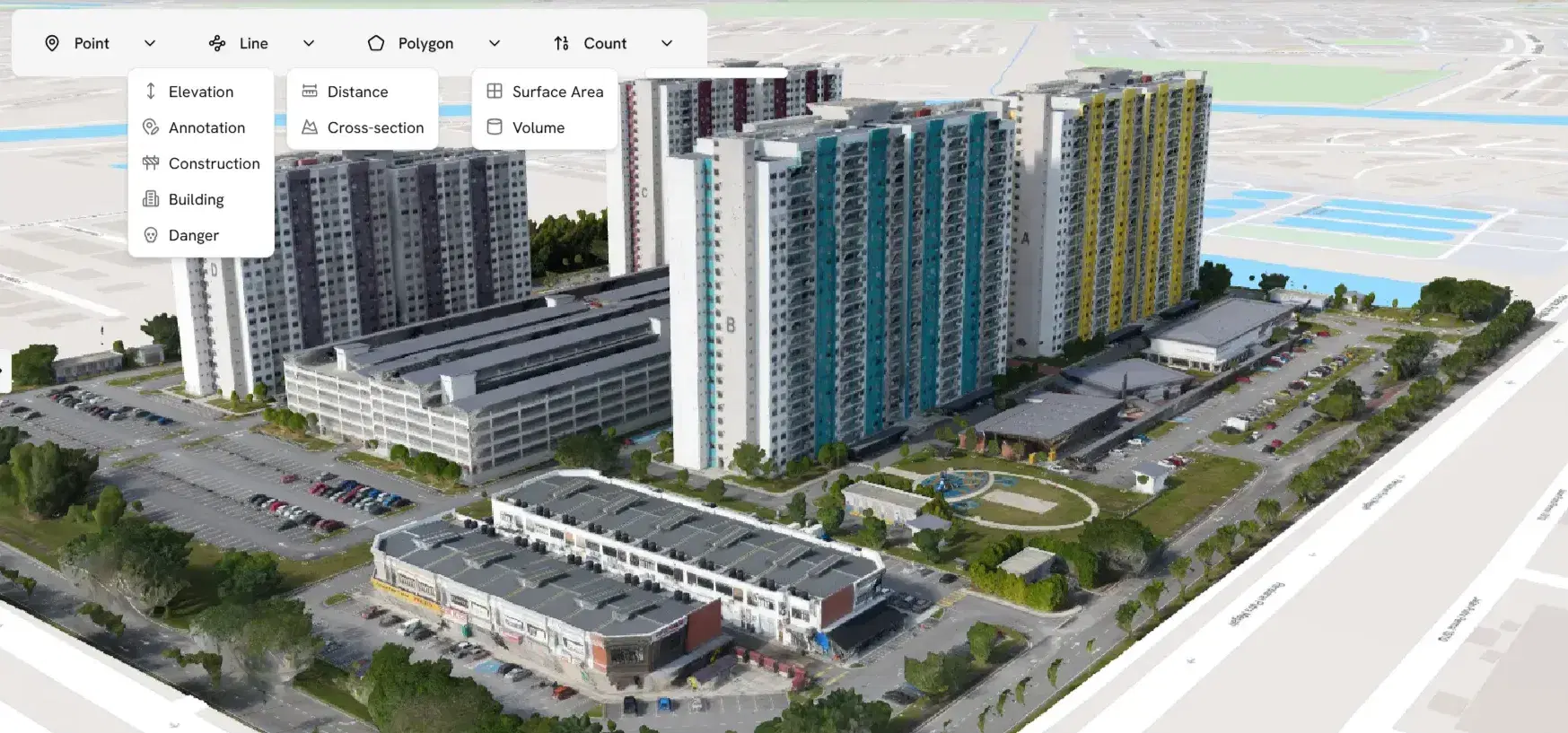
- A Living Digital Twin and Drone 3D Mapping of Your Asset - From Ground-Break to Long-Term Operations
- The Owner's Asset Lifecycle - Phase by Phase
- Phase 1 - Site Selection and Due Diligence (Owner-Led Data)
- Phase 2 - Preconstruction Planning with Survey-Grade Site Data
- Phase 3 - Independent Construction Drone Mapping and Monitoring for Owners
- Phase 4 - Handover and As-Built Documentation
- Phase 5 - Operations, Facility Management, and Asset Condition Monitoring
- The Financial Case for Independent Owner-Side Construction Monitoring
- Your Asset as a Living Digital Twin - Not a Static Document
- Portfolio-Level Construction and Asset Monitoring in One Platform
- Who Uses Aeroyantra for Owner and Developer Asset Management
- Frequently Asked Questions
- Your Capital Deserves Better Visibility Than a Contractor's Progress Report.
Construction Monitoring and Drone Mapping for Owners & Developers: Your Capital Is on Site. You Should Be Able to See It.
Every day your project is under construction, capital is being deployed against a plan you cannot independently verify. Contractors submit progress claims. Engineers certify them. You approve payment. And somewhere in that chain, the gap between what was built and what was reported quietly grows.
Aeroyantra is a construction monitoring and digital twin platform for owners and developers, providing independent, survey-grade visibility across the full asset lifecycle using drone surveying and mapping and aerial survey drone technology. Aeroyantra gives owners and developers a single, independent source of truth across the full asset lifecycle using our drone mapping services and aerial photogrammetry - from site selection and preconstruction planning through construction monitoring, handover documentation, and long-term facility management.
Real site data. Not contractor reports. Not spreadsheet assumptions. Not site visits that cover 5% of the project area.
Why Owners Are the Last to Know When Something Goes Wrong on Their Own Project
The information flow on a construction project runs from contractor to engineer to owner. By the time a problem reaches the owner, it has already been filtered, delayed, and in some cases, actively managed to minimize its appearance.
This is not a people problem. It is a data problem.
What owners are working with today:
-
Progress reports written by the people being paid to show progress - Contractor-submitted updates have an inherent conflict of interest that no amount of good faith resolves
-
Periodic site visits that cover a fraction of the project - A two-hour site walk on a 10-acre development gives you a ground-level view of 2% of the project area
-
Quantity certifications based on measurements the owner cannot independently verify - When a contractor claims 15,000 cubic meters of earthwork was completed, what is the owner's basis for agreement or dispute?
-
No time-series record of what was built when - Without a consistent aerial record, disputes about when work was completed, what condition it was in, and whether it matched the approved design have no independent reference point
-
Handover packages that do not reflect what was actually built - As-built drawings assembled from contractor records rarely match the actual constructed condition
-
No visibility into asset condition after handover - Once the contractor leaves, the owner has no systematic way to monitor building condition, detect early deterioration, or plan maintenance before failures occur
The result is that owners - the people with the most capital at risk - have the least independent visibility into what is happening with it.
A Living Digital Twin and Drone 3D Mapping of Your Asset - From Ground-Break to Long-Term Operations
Aeroyantra gives owners and developers an independent, georeferenced, time-stamped aerial record of their assets using drone mapping services, aerial drone survey, and UAV mapping services - updated as frequently as the project requires, accessible to any authorized stakeholder, and structured to support decisions at every phase of the asset lifecycle using our drone surveying and mapping, GIS mapping, and aerial mapping software.
This is not a progress photo tool. It is a structured data platform that produces engineering-grade outputs your team can measure, compare, and defend using aerial survey drone technology and drone lidar mapping.
What that means for owners and developers:
-
Independent verification - Aerial data captured by your team, not the contractor's, providing an independent basis for progress certification and payment approval
-
A time-series record that cannot be disputed - Georeferenced, time-stamped aerial records at every monitoring cycle, preserved as a chronological archive of exactly what was built and when
-
BIM and design overlay - Current site condition compared against approved design drawings and BIM models, showing deviations before they become expensive corrections
-
Portfolio-wide visibility - Single platform access to aerial data across all active projects, giving ownership and investment teams a current view of the full portfolio
-
Handover documentation built throughout the project - As-built records assembled from aerial data captured throughout construction - not assembled reactively at the end
-
Post-handover asset monitoring - Consistent aerial monitoring of building condition, facade integrity, roof condition, and site infrastructure after handover
The Owner's Asset Lifecycle - Phase by Phase
Phase 1 - Site Selection and Due Diligence (Owner-Led Data)
Hidden site risks are the most expensive kind. They show up after design has started, after commitments have been made, and after the cost of changing course has multiplied. A site that looks viable from a satellite image or a site visit can carry earthwork surprises, drainage problems, encroachment issues, and utility conflicts that a drone survey would have identified before a rupee was committed.
What Aeroyantra delivers for site selection:
-
High-resolution orthomosaic - Current aerial imagery of the site at 1-3 cm/pixel, showing actual ground conditions rather than outdated satellite data
-
Digital Terrain Model (DTM) - Accurate terrain model for earthwork estimation, drainage assessment, and foundation planning before design begins
-
Slope and drainage analysis - Site-wide slope mapping and drainage basin analysis to identify flood risk, drainage requirements, and earthwork implications
-
Encroachment and boundary verification - Aerial verification of site boundaries against cadastral records, identifying encroachments before acquisition
-
Existing structure and utility mapping - Georeferenced record of existing structures, trees, and utility infrastructure for demolition planning and conflict identification
-
Cut-and-fill balance estimation - Pre-acquisition earthwork cost estimation to inform bid pricing and project feasibility
-
Comparative site analysis - Multiple candidate sites surveyed and compared using consistent aerial data for objective site selection decisions
Phase 2 - Preconstruction Planning with Survey-Grade Site Data
Projects run smoother when they start with accurate data. A preconstruction baseline survey gives your design team the accurate terrain, boundary, and existing condition data they need to produce a design that reflects reality - reducing redesigns, change orders, and budget surprises before construction begins.
What Aeroyantra delivers for preconstruction:
-
Accurate topographical survey baseline - Survey-grade terrain model for structural design, drainage design, and infrastructure routing
-
Existing condition documentation - Georeferenced record of site conditions before ground-break, establishing the baseline for all subsequent progress comparisons
-
Design coordination support - Accurate spatial data for architect and engineer use in AutoCAD, Revit, and GIS platforms
-
Earthwork quantity estimation - Pre-construction cut-and-fill calculations from accurate DTM data for budget validation
-
Lender and investor reporting baseline - Survey-grade site documentation for project finance submissions and investor reporting packages
-
Regulatory submission support - Accurate site data for development authority submissions and project registration documentation
Phase 3 - Independent Construction Drone Mapping and Monitoring for Owners
This is where owner capital is most at risk and owner visibility is most limited. Construction monitoring is the highest-value application of aerial data for owners and developers - because it is the phase where problems are cheapest to catch and most expensive to miss.
This turns drone surveys into an independent construction progress verification system rather than a contractor-reported workflow.
What Aeroyantra delivers for construction monitoring:
-
Regular aerial progress updates - Weekly or fortnightly orthomosaic and 3D model updates covering the full site in a single flight, processed and available within 24-48 hours
-
Independent progress certification support - Aerial data providing an independent basis for verifying contractor progress claims before payment approval
-
BIM and design overlay analysis - Current site condition compared against approved BIM model or design drawings, identifying deviations before critical work milestones
-
Earthwork quantity verification - Independent measurement of earthwork volumes for billing validation and contractor reconciliation
-
Time-series progress archive - Chronological aerial record of construction progress at every monitoring cycle, preserved as a georeferenced, time-stamped dataset
-
Dispute documentation - When contractor and owner disagree on progress, condition, or quantities, the aerial record provides an independent reference point that neither party can dispute
-
Milestone documentation - Georeferenced, time-stamped aerial records at every contractual milestone for lender, investor, and regulatory reporting
-
Stakeholder sharing - Browser-based 3D viewer accessible to lenders, investors, and ownership teams without software installation
Phase 4 - Handover and As-Built Documentation
Handover should not mean starting from scratch. Owners who receive a contractor-assembled as-built package at handover typically receive a document that reflects what was designed more than what was built - and that provides no independent verification of actual constructed conditions.
The result is a handover-ready digital twin built from measured site data, not contractor-assembled documents. Aeroyantra produces handover documentation from aerial data captured throughout the project - so the record is built continuously, not assembled reactively at the end.
What Aeroyantra delivers for handover:
-
Final site orthomosaic and 3D model - Complete aerial record of the finished development at survey-grade accuracy
-
As-built deviation report - Quantified comparison of final construction against approved design across the full site
-
Complete time-series construction archive - Full chronological record of construction progress from ground-break to completion, preserved and searchable
-
Digital twin handover package - Georeferenced 3D model of the completed asset as the foundation for ongoing facility management
-
Lender and investor closeout documentation - Survey-grade aerial records for project finance closeout and investor reporting
-
Regulatory completion documentation - Aerial evidence of project completion for occupancy certificate and regulatory closeout submissions
Phase 5 - Operations, Facility Management, and Asset Condition Monitoring
Once the asset is live, the focus shifts from building it to protecting its value. Without systematic aerial monitoring, building condition deteriorates gradually and invisibly until a maintenance failure becomes a capital expenditure crisis - or an insurance claim.
What Aeroyantra delivers for operations:
-
Roof and facade condition monitoring - High-resolution aerial inspection of roof membranes, facade cladding, and external building elements for early deterioration detection
-
Drainage and waterproofing assessment - Aerial identification of ponding, blocked drainage outlets, and waterproofing failures before water ingress causes structural damage
-
Thermal inspection - Thermal payload surveys identifying insulation failures, moisture infiltration, and HVAC system anomalies from aerial altitude
-
Site infrastructure monitoring - Condition monitoring of roads, parking, landscaping, and external infrastructure across the development
-
Time-series condition archive - Consistent aerial monitoring record enabling comparison of building condition over time for maintenance planning and insurance documentation
-
Pre- and post-incident documentation - Rapid aerial assessment of storm damage, flooding, fire exposure, and other incidents for insurance claims and remediation planning
-
Capital expenditure planning data - Condition data across the portfolio enabling prioritized, data-driven capital expenditure planning rather than reactive emergency repairs
The Financial Case for Independent Owner-Side Construction Monitoring
The cost of drone monitoring across a project lifecycle is a fraction of the cost of a single undetected deviation, a single disputed payment, or a single maintenance failure that was not caught early. Here is where the financial case is clearest:
Overbilling prevention
Contractors submitting progress claims for work not yet completed - or for quantities that exceed actual measurements - is one of the most consistent sources of capital leakage on construction projects. An independent aerial measurement at each billing cycle gives owners the data to approve, query, or reject claims on the basis of evidence rather than trust.
Dispute resolution
Construction disputes are expensive, slow, and damaging to project relationships. The majority of disputes arise because neither party has an independent, contemporaneous record of site conditions at the time the dispute arose. A georeferenced, time-stamped aerial archive resolves most disputes before they reach arbitration - because the record speaks for itself.
Insurance and risk management
Insurers increasingly require documented evidence of building condition for property insurance, construction all-risk policies, and post-incident claims. An aerial monitoring record provides a pre-incident baseline that accelerates claims settlement and reduces disputes over pre-existing conditions.
Lender and investor reporting
Project finance lenders and equity investors require regular, verifiable progress reporting. Aerial data provides a visual, georeferenced progress record that satisfies lender monitoring requirements and gives investors the transparency they need to maintain confidence in project delivery.
Asset value protection
Buildings that are maintained on the basis of condition data rather than failure events have lower lifecycle maintenance costs and retain value better over time. Early detection of roof, facade, and drainage issues prevents the compounding damage that turns a minor repair into a major capital expenditure.
Your Asset as a Living Digital Twin - Not a Static Document
A digital twin is not a 3D model. It is a continuously updated spatial record of your asset that reflects current conditions, carries the full history of the asset from ground-break to present, and provides the data layer that every operational decision can reference.
Aeroyantra builds the digital twin for your asset through consistent aerial data capture across the full lifecycle - so that by the time your asset reaches operations, you have a georeferenced, searchable, time-stamped record of everything that was built, when it was built, and what condition it is in today.
What the Aeroyantra digital twin gives owners:
-
A searchable construction archive - Every survey cycle preserved and searchable by date, location, and project phase
-
Current asset condition - The most recent aerial survey always reflects current conditions, not conditions from the last site visit
-
Historical comparison - Any two survey cycles can be compared to show what changed between them - construction progress, condition changes, or deviation development
-
Stakeholder access control - Lenders, investors, engineers, and facility managers each access the data they need, with permissions controlled by the owner
-
Integration with existing systems - Aerial data and point clouds exportable to AutoCAD, Revit, ArchiCAD, and facility management platforms
Portfolio-Level Construction and Asset Monitoring in One Platform
Owners and developers managing multiple projects face a specific problem: information about each project arrives in different formats, at different frequencies, from different sources - making portfolio-level visibility nearly impossible without significant manual aggregation.
This gives ownership teams portfolio-level construction and asset monitoring from a single, standardized data platform. Aeroyantra standardizes aerial data capture and reporting across the full portfolio, giving ownership and investment teams a single platform view of every active project.
What Aeroyantra delivers for portfolio management:
-
Standardized survey protocols - Consistent flight parameters, processing standards, and deliverable formats across all projects for meaningful comparison
-
Portfolio dashboard - Single view of all active projects showing current status, last survey date, and key progress metrics
-
Cross-project progress comparison - Standardized progress data enabling comparison of delivery performance across projects and contractors
-
Centralized documentation - All project aerial records, reports, and documentation in a single platform accessible to ownership, finance, and asset management teams
-
Enterprise access controls - Role-based access for project teams, lenders, investors, and management with appropriate data permissions
-
Exportable reporting - Portfolio-level and project-level reports exportable for board, investor, and lender presentations
Who Uses Aeroyantra for Owner and Developer Asset Management
Aeroyantra is used by owners, developers, and asset managers responsible for:
-
Residential and commercial real estate development - apartments, townships, office parks, retail developments
-
Industrial and warehousing development - logistics parks, manufacturing facilities, data centers
-
Hospitality and mixed-use development - hotels, serviced apartments, integrated townships
-
Infrastructure development - roads, utilities, civic facilities developed by private developers
-
Institutional development - schools, hospitals, and civic infrastructure
-
Real estate private equity and fund managers monitoring construction progress across portfolio investments
-
Project finance lenders requiring independent progress verification for drawdown approvals
-
Facility management teams monitoring post-handover asset condition
Frequently Asked Questions
Q1: How does Aeroyantra give owners independent verification of construction progress?
Aeroyantra aerial surveys are commissioned and controlled by the owner - not the contractor. Each survey flight produces a georeferenced, time-stamped aerial record of actual site conditions, independent of any contractor-submitted report or progress claim. The aerial data can be compared against the approved design, BIM model, or project schedule to produce an independent assessment of what has actually been built at any point in the project. This gives owners an evidence basis for approving, querying, or disputing contractor progress claims.
Q2: How frequently should construction sites be surveyed for effective owner monitoring?
For active construction projects, fortnightly surveys are the standard for effective owner monitoring - frequent enough to catch deviations before they compound, and aligned with typical billing cycle frequencies. For high-value or fast-moving projects, weekly surveys provide tighter control. For slower-moving projects or during less active phases, monthly surveys are typically sufficient. Aeroyantra recommends aligning survey frequency with billing cycles so that each payment certification has an independent aerial record.
Q3: Can Aeroyantra data be used to support regulatory compliance and submissions?
Yes. Aeroyantra produces georeferenced, time-stamped aerial records that document construction progress at every survey cycle. This data supports quarterly progress reporting, occupancy certificate applications, and development authority compliance submissions. The aerial record provides visual, georeferenced evidence of construction progress that satisfies the documentation requirements of regulatory authorities.
Q4: How does the BIM overlay feature work and what does it show?
The BIM overlay feature aligns the current aerial survey data - orthomosaic or 3D surface model - against the approved BIM model or design drawings. The result is a visual comparison showing where current site conditions match design intent and where deviations exist. Deviations are color-coded by magnitude, enabling engineers and owners to identify areas requiring attention before critical work milestones. Supported BIM formats include IFC, RVT, DWG, and DXF.
Q5: Can lenders and investors access project data without being on site?
Yes. Aeroyantra's browser-based platform allows owners to share project data with lenders, investors, and other stakeholders through controlled access links - no software installation required. Stakeholders can view current site conditions, review the progress archive, and access reporting data from any device. Access permissions are controlled by the owner, with separate access levels for different stakeholder types.
Q6: What happens to the aerial data after the project is complete?
All aerial data is retained in the Aeroyantra platform as a permanent, searchable archive. After project completion, the full construction record - every survey cycle from ground-break to handover - remains accessible as the foundation for ongoing facility management, insurance documentation, and future due diligence. The data does not expire and can be exported at any time in standard formats.
Q7: Can Aeroyantra support post-handover building condition monitoring?
Yes. Aeroyantra supports ongoing aerial condition monitoring after handover - roof and facade inspection, drainage assessment, thermal surveys, and site infrastructure monitoring. Post-handover monitoring is typically conducted quarterly or annually depending on asset type and condition management requirements. The post-handover aerial record is maintained in the same platform as the construction archive, giving facility managers a continuous condition history from ground-break to present.
Q8: How does Aeroyantra help with insurance claims and risk management?
Aeroyantra maintains a georeferenced, time-stamped aerial record of asset condition at every survey cycle. This pre-incident baseline is critical for insurance claims - it establishes documented pre-incident condition, enables precise damage assessment, and accelerates claims settlement by providing visual evidence that neither party can dispute. For construction all-risk policies, the construction archive documents site conditions at every phase, supporting claims related to construction defects, weather damage, and third-party incidents.
Your Capital Deserves Better Visibility Than a Contractor's Progress Report.
Whether you are selecting a site, monitoring active construction, preparing for handover, or managing a completed asset, Aeroyantra gives you the independent, georeferenced aerial data your ownership team needs to make decisions based on what is actually on site.
Other Industries We Serve
Discover how Aeroyantra delivers survey-grade drone mapping across different sectors
Mining & Quarrying
Stockpile volumes, pit progression, and compliance documentation
Construction
Earthworks monitoring, cut/fill analysis, and as-built verification
Roads & Highways
Corridor mapping, alignment verification, and progress tracking
Rail & Linear Infrastructure
Corridor monitoring, embankment tracking, and ROW verification
Industrial & EPC
Site planning, structural inspection, and facility documentation
Waste Management
Landfill volume tracking, cell progression, and compliance
Smart City & Urban Works
Urban planning, land use monitoring, and GIS mapping
Agriculture
Precision farming, crop monitoring, and irrigation planning
Oil & Gas
Pipeline monitoring, facility inspection, and thermal imaging
Solar
Panel inspection, performance monitoring, and hot spot detection