Everything related to the Aeroyantra cloud platform, browser tools, and commercial plans.
Explore specialized workflows for mining, construction, infrastructure, energy, and enterprise sectors.
Browse service lines by output type, project environment, and delivery requirement.
Read the material that supports evaluation, project planning, and field execution.
Topographic Drone Surveys for Civil Design, Drainage, and Earthwork Planning
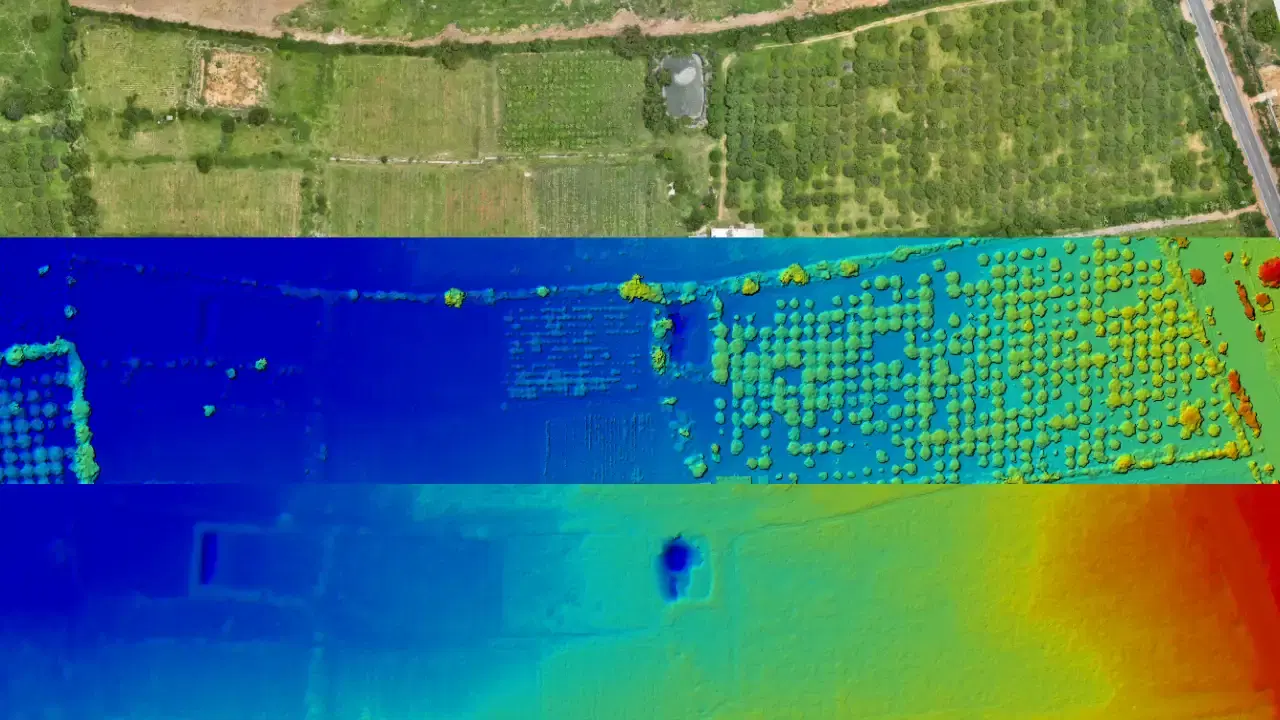
Civil and infrastructure projects fail when terrain assumptions are wrong. Our DGCA-certified teams capture your site with RTK or PPK workflows, process the data in-house, and deliver contours, DSMs, DTMs, slope layers, and cross-sections that design teams can use immediately for grading, drainage, road, land development, and solar baseline work across India.
Topographical Survey Deliverables - Drone Mapping and Surveying Services
Topographical Survey Outputs From Recent Projects
Every drone topographical survey is delivered as files and as a live site: DSM and DTM, contours at your interval, cross-sections and volumes, controlled with DGPS ground control points.
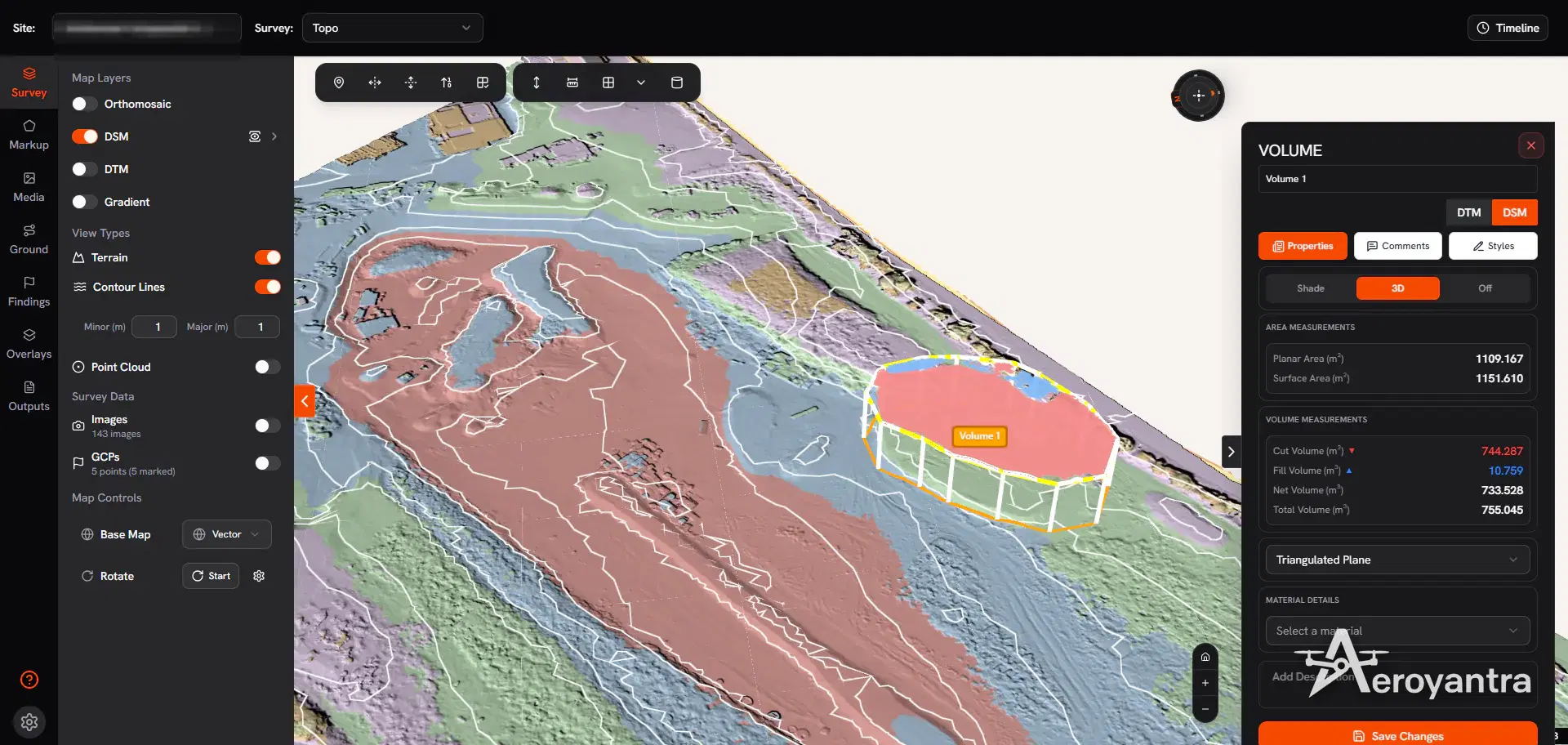
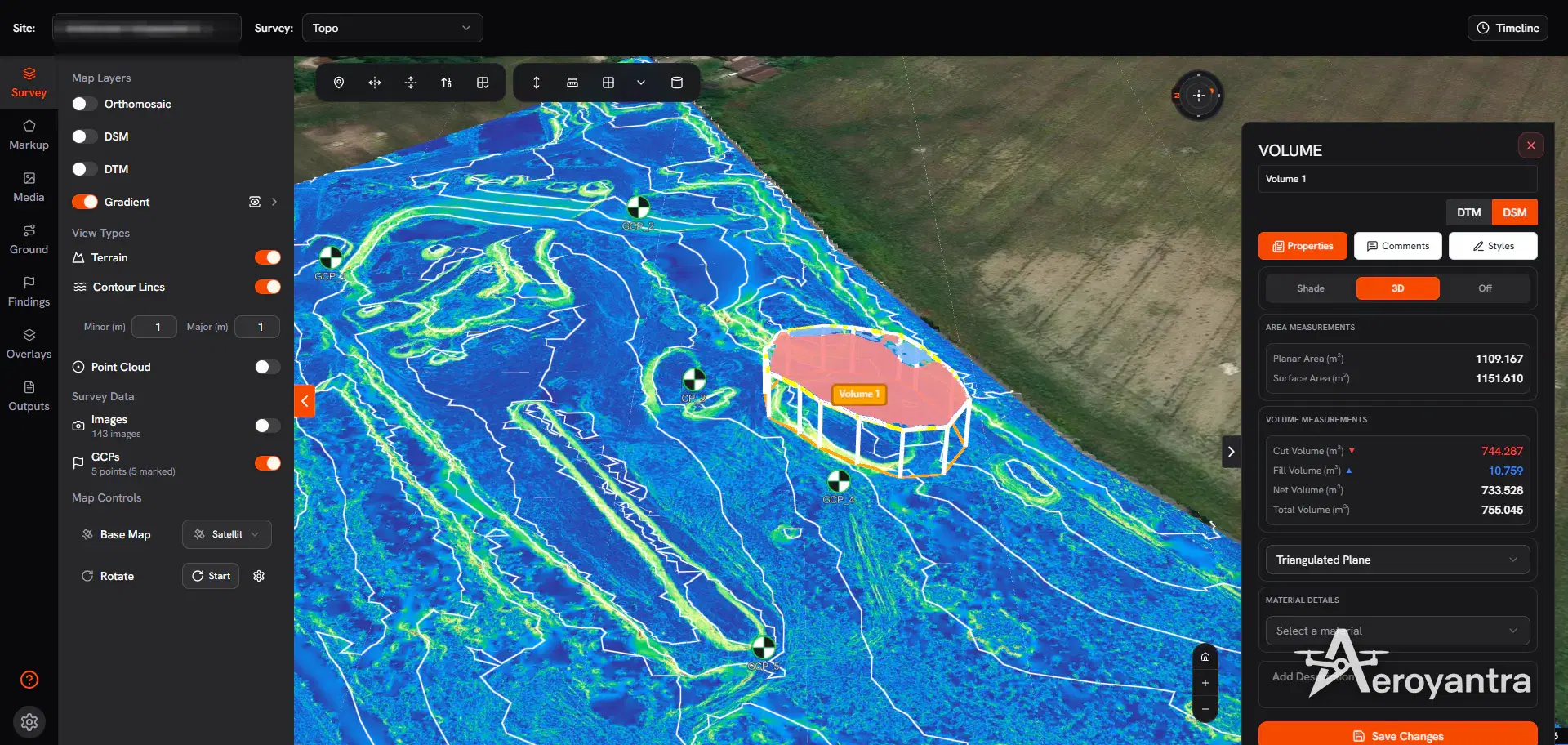
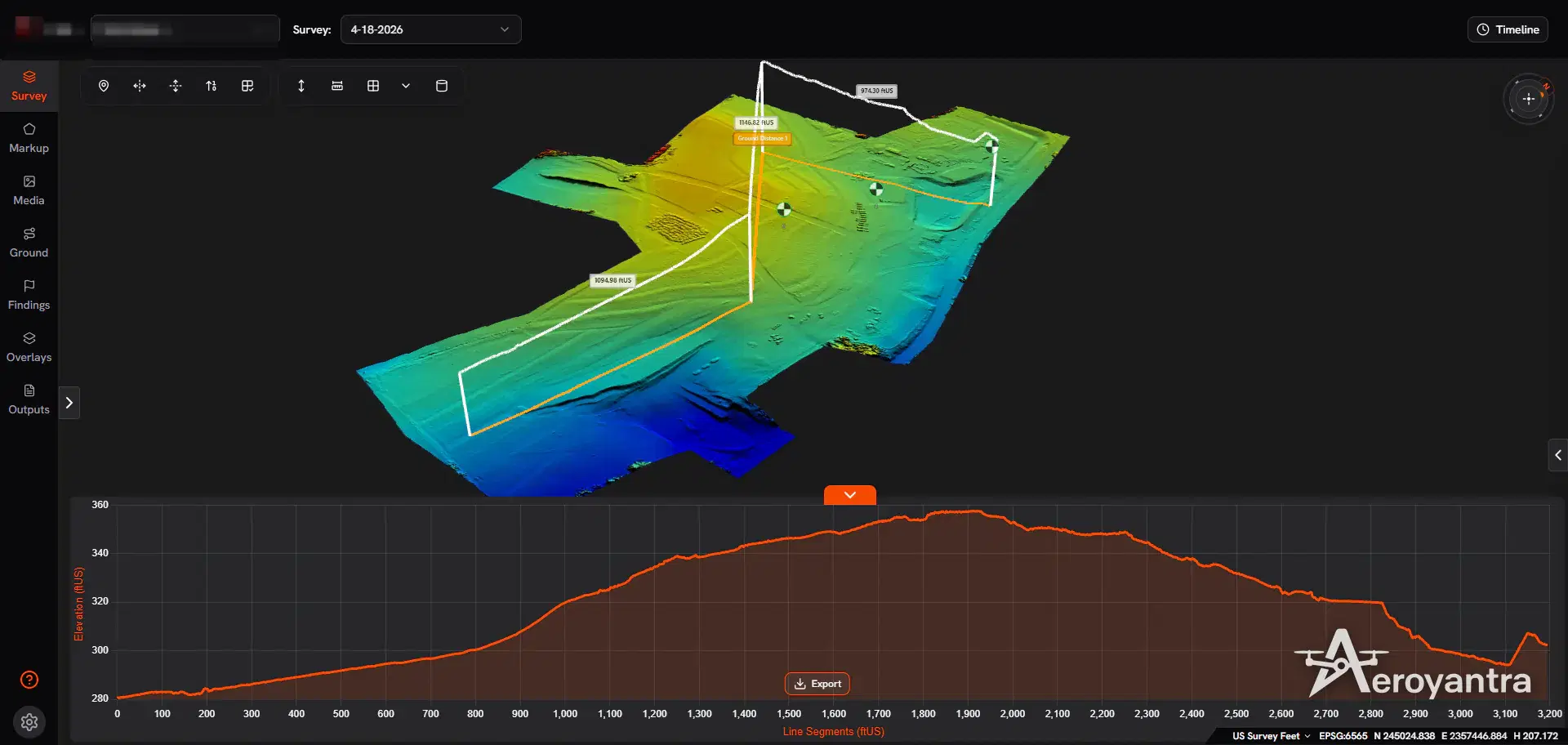
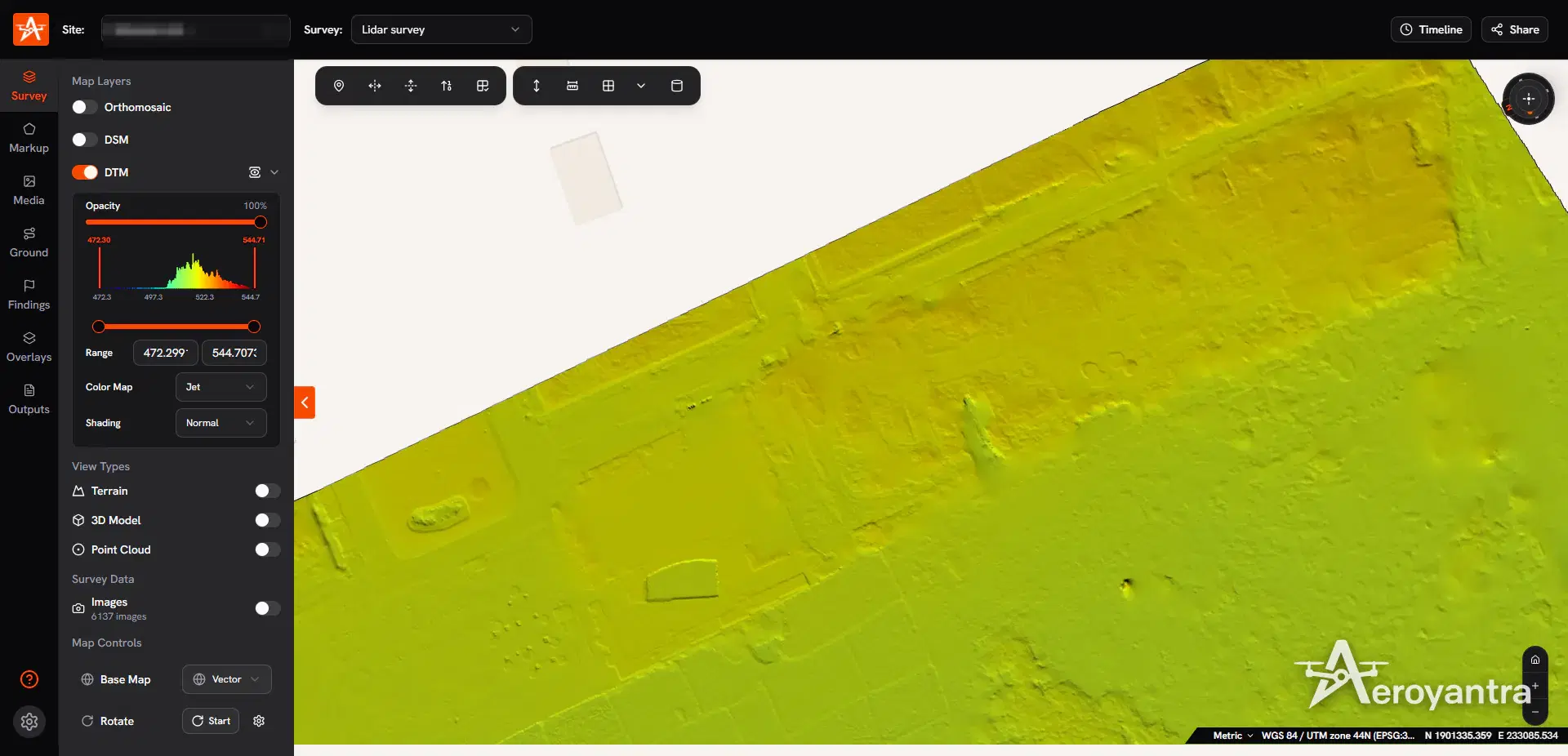
Explore the outputs in topographic survey software, ground control in DGPS surveys, and the wider aerial survey process.
Accuracy Options
Choose the workflow that matches project tolerance, site conditions, and turnaround.
GCP Workflow
Ground control points surveyed with total station or DGPS for strong accuracy at lower project cost.
General site surveys, land development, and preliminary planning
RTK Drone Mapping Workflow
RTK drone mapping with real-time kinematic positioning and base-station support for faster field execution with fewer GCPs. The preferred workflow for drone surveying and mapping on infrastructure projects.
Infrastructure projects, road alignment, and construction site mapping
PPK Workflow
Post-processed kinematic with CORS or base data for the highest-confidence survey outputs.
Engineering design, regulatory submissions, and repeatable survey control
Aerial Survey Applications
Topographical survey and aerial mapping for civil, infrastructure, energy, and land development workflows.
Pre-Construction Planning with Aerial Mapping
Capture existing terrain using drone survey mapping and GIS mapping before project start for design, earthwork estimation, drainage planning, and baseline records.
Land Development
Topographic mapping for plotted development, industrial parks, warehouses, and commercial campuses.
Road and Corridor Design
Terrain and section data for alignment studies, embankment planning, and structure tie-ins.
Flood and Drainage Modeling with GIS Mapping
High-accuracy terrain models and GIS mapping outputs for hydrology studies, flood risk assessment, and stormwater design.
Solar and Industrial Baselines
Bare-earth and slope information for utility-scale solar, substations, and industrial site grading.
Engineering Design Inputs
Survey data for foundation planning, retaining walls, platforms, and civil engineering calculations.
Fast Turnaround
Turnaround starts after field capture. Rush processing is available for urgent design or bid packages.
Engineering-Ready Outputs from Aerial Photogrammetry
Topographic data from drone surveying and mapping is only useful if the design team can work with it immediately. We deliver surfaces, contours, and sections using drone mapping software and aerial mapping software in formats that fit common civil, GIS, and planning workflows used on Indian projects.
India Project Workflows We Commonly Support
We keep this page focused on topographic work, but the terrain models are routinely used on Indian projects where development, approvals, and earthwork decisions depend on current site geometry.
LiDAR Topographic Survey for Vegetation-Dense Sites
Standard photogrammetry cannot see through tree canopy. Our drone-based LiDAR surveys use multi-return sensors to penetrate vegetation and extract bare-earth DTMs for sites where dense tree cover, scrub, or plantation crops obstruct the ground — common on Indian land development, solar, and infrastructure project sites.
Frequently Asked Questions
Common questions about topographic drone surveys
Aeroyantra offers three accuracy tiers: GCP workflow (5-10 cm), RTK workflow (3-5 cm), and PPK workflow (2-5 cm). The right method depends on project tolerance, control availability, site size, and turnaround. We recommend the workflow after reviewing your drawings, coordinate system, and intended use.
Small sites can often be surveyed and processed the same day. Sites between 10 and 100 acres are typically delivered within 24 hours, and larger packages within 48 hours or as phased deliveries. Actual timing depends on terrain, airspace, and control requirements.
Aeroyantra generates contours at any interval you need, commonly 0.25 m, 0.5 m, 1 m, or 2 m depending on terrain and project requirements. Contours are delivered in DXF format and can be paired with breaklines, DSM, and DTM surfaces for design workflows.
Yes. Aeroyantra extracts cross-sections and longitudinal profiles at the interval your team specifies, typically every 10 m, 20 m, or 50 m along a provided alignment. These are delivered in formats suitable for earthwork calculations and civil design software.
Standard photogrammetry models the visible surface, so dense tree cover or standing crop can limit bare-earth extraction. On open or lightly vegetated sites, drone topographic surveys perform very well. For heavily vegetated sites, we flag the limitation early and recommend the right approach before fieldwork starts.
Yes. Aeroyantra can work with project control, local benchmarks, and CORS-supported workflows where available. If your design consultant uses a specific grid, benchmark, or coordinate system, we confirm that before flying so the outputs align with your design environment.
Yes. Aeroyantra's topographic outputs are commonly used for plotted development, layout planning, and approval documentation where geo-referenced terrain, area statements, and contour information are required. We recommend confirming the exact submission package needed by your consultant or approving authority before the first survey cycle.
Deliverables are compatible with common design and GIS tools including AutoCAD, Civil 3D, QGIS, ArcGIS, and other platforms that accept DXF, GeoTIFF, LAS, KML, and PDF outputs. If your team uses a specific import standard, we can align the export package before delivery.
Drone surveys are far faster on medium and large sites because they capture a complete terrain surface rather than point-based samples. Total station surveys still remain useful for tight-detail or indoor work, but for open sites above a few acres, drone topographic surveys usually provide much more usable terrain context in less time.