
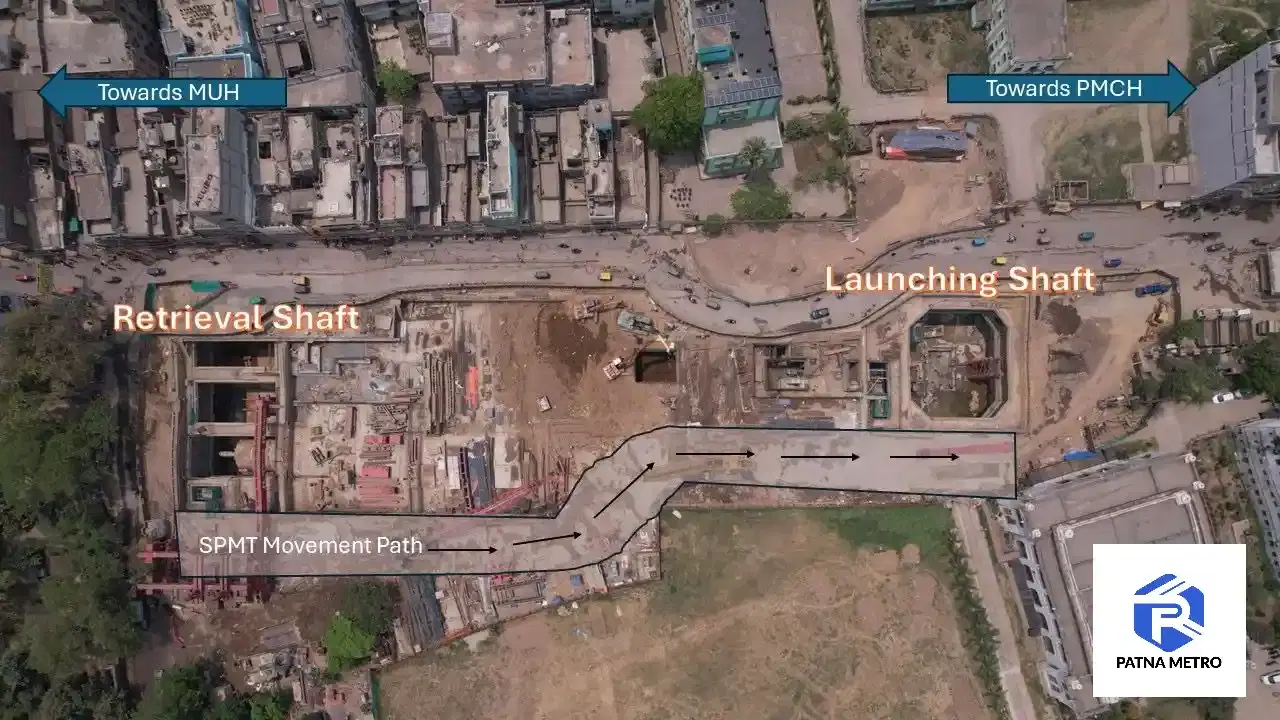
Drone Survey Case Study: Patna Metro Planning
How drone aerial survey improved construction planning on the Patna Metro project. Faster data, better site insights, and lessons from an infra pilot.
Drone Survey Case Study: Patna Metro Planning
How drone aerial survey improved construction planning on the Patna Metro project. Faster data, better site insights, and lessons from an infra pilot.
Table Of Content
At a Glance
| Company | One of India's largest EPC contractors |
| Contact | Shashwat Mishra, Planning Manager, L&T |
| Project | Patna Metro Rail Project |
| Project Type | Urban metro rail infrastructure - civil, earthworks, viaduct, station construction |
| Stage | Active pilot - evaluating platform for broader rollout |
| Previous Method | Manual ground surveys, spreadsheet-based planning reconciliation |
| Platform | Aeroyantra cloud processing |
Background: A Large EPC Team Testing Something New
This is not a story about a completed rollout. It is a story about a large, experienced construction planning team - the kind that has run major infrastructure projects across India for decades - deciding to try something different on one project, and seeing enough early value to keep going.
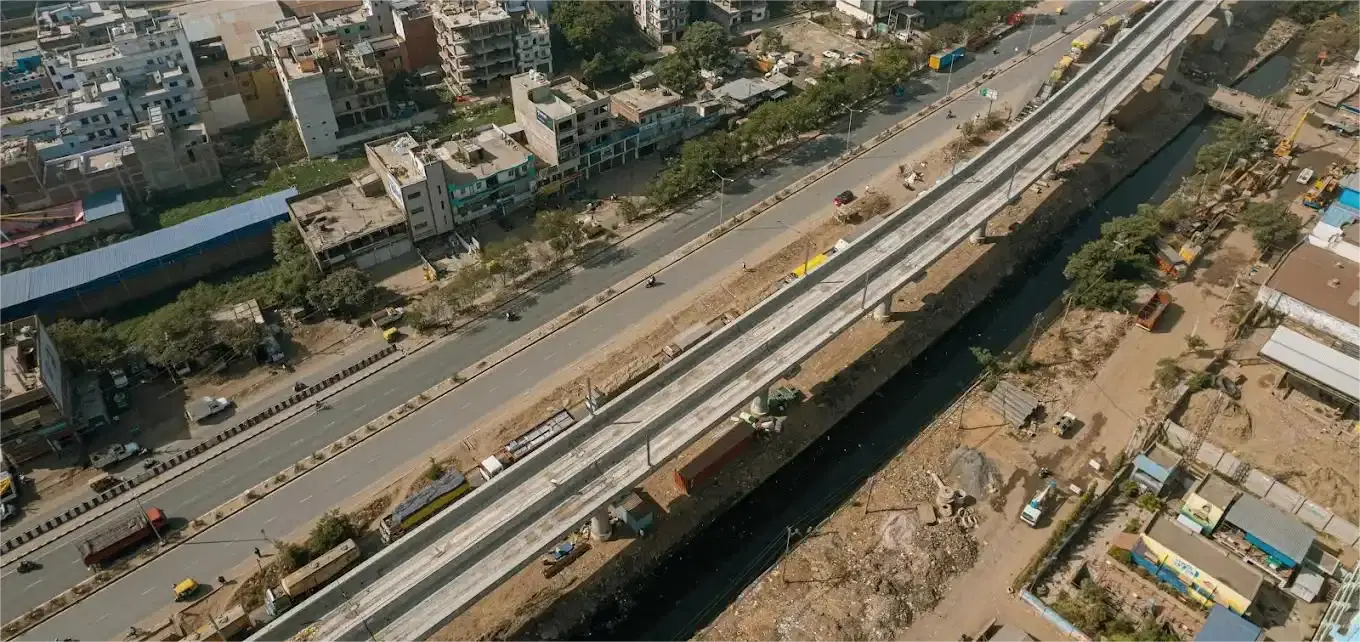
The team is working on the Patna Metro Rail Project: a multi-kilometre elevated corridor through one of Bihar's most densely urbanised environments. Simultaneous execution across pile foundations, pier caps, viaduct segments, station box construction, and utility diversions. Tight government and client schedules. Multiple subcontractors and work packages running in parallel.
Shashwat Mishra, Planning Manager at L&T, is responsible for keeping all of that coordinated. His team translates the master programme into weekly and monthly targets, tracks actual progress against those targets, reconciles earthwork quantities, and flags deviations before they grow into delays. It is a high-stakes planning function on a high-visibility project.
When a colleague suggested trialling Aeroyantra for site data capture, Shashwat's first instinct was practical: will this actually fit into how we work, or is it just another tool that creates more overhead than it saves?
The pilot is still running. But the early answer is leaning one way.
The Problem They Were Trying to Solve
A metro rail corridor is not a single worksite. It is dozens of active work fronts spread across several kilometres, each at a different stage, each generating data that needs to be measured, reconciled, and fed back into the planning system.
The conventional approach - ground survey crews, spot levels, interpolated profiles - works. But it has real limits on a project of this scale:
-
Coverage per cycle is always partial. Survey crews can only cover so much ground in a week. On a corridor with simultaneous activity across multiple pier zones, station boxes, and approach roads, assembling a coherent site-wide snapshot at any given moment is genuinely hard. Data arrives from different zones at different times.
-
Earthwork quantities are estimates. Cut and fill volumes calculated from spot levels carry meaningful uncertainty on large, irregular surfaces. The numbers are defensible - but when they disagree with the contractor's figures, there is no clean way to establish ground truth.
-
Planning data is always playing catch-up. By the time survey data is collected, processed, and fed into the planning system, the site has moved on. Decisions at the weekly review are made on numbers that are already several days old.
-
Deviations show up late. A work front running behind weekly targets typically surfaces in the monthly reconciliation - not in the weekly review where there is still time to act.
-
Progress documentation takes time. Compiling progress reports for the client involves photographs, spreadsheet extracts, and manual markup. The effort is significant, and the output is less complete than anyone would like.
None of these problems are unique to this project. They are the standard constraints of planning a large linear infrastructure project with conventional survey methods. Shashwat's team had learned to work within them. But the question the pilot was designed to answer was: do they have to?
The Pilot: What They Are Actually Testing
The team started flying systematic drone missions over select sections of the Patna Metro corridor and uploading imagery to Aeroyantra's cloud platform. No local processing hardware. No specialist software. Flights go up, data goes to the cloud, outputs come back within hours.
The initial scope was narrow - a few active work fronts, one flight cycle a week, used alongside (not instead of) their conventional survey workflow. The goal was not to replace anything immediately. It was to understand whether the platform's outputs - orthomosaics, digital surface models, volumetric analysis - were accurate enough and fast enough to actually be useful inside a planning workflow built around weekly reviews and monthly reconciliations.
"We didn't come into this looking for a silver bullet. We've been running large projects for a long time and we know how to get things done. The question was whether this kind of data could genuinely improve how we plan - or whether it would just add another layer to manage. The early results are interesting."
Shashwat Mishra, Planning Manager, L&T - Patna Metro Rail Project
What the Early Results Are Showing
The coverage gap is real and solvable
The most immediate thing the team noticed was how much more of the corridor a drone mission covers compared to a ground survey crew in the same time. Sections that would take a survey team multiple days to measure in full are captured in a single flight. That matters on a corridor where activity is spread across kilometres simultaneously.
Even in the pilot phase, having an orthomosaic of the full corridor - not just the sections the survey crew got to this week - has changed some conversations at the weekly planning review. Shashwat's team can see where work is active, where it has stalled, and where a zone is running ahead or behind, without waiting for partial crew reports to be compiled.
Volume numbers that are easier to defend
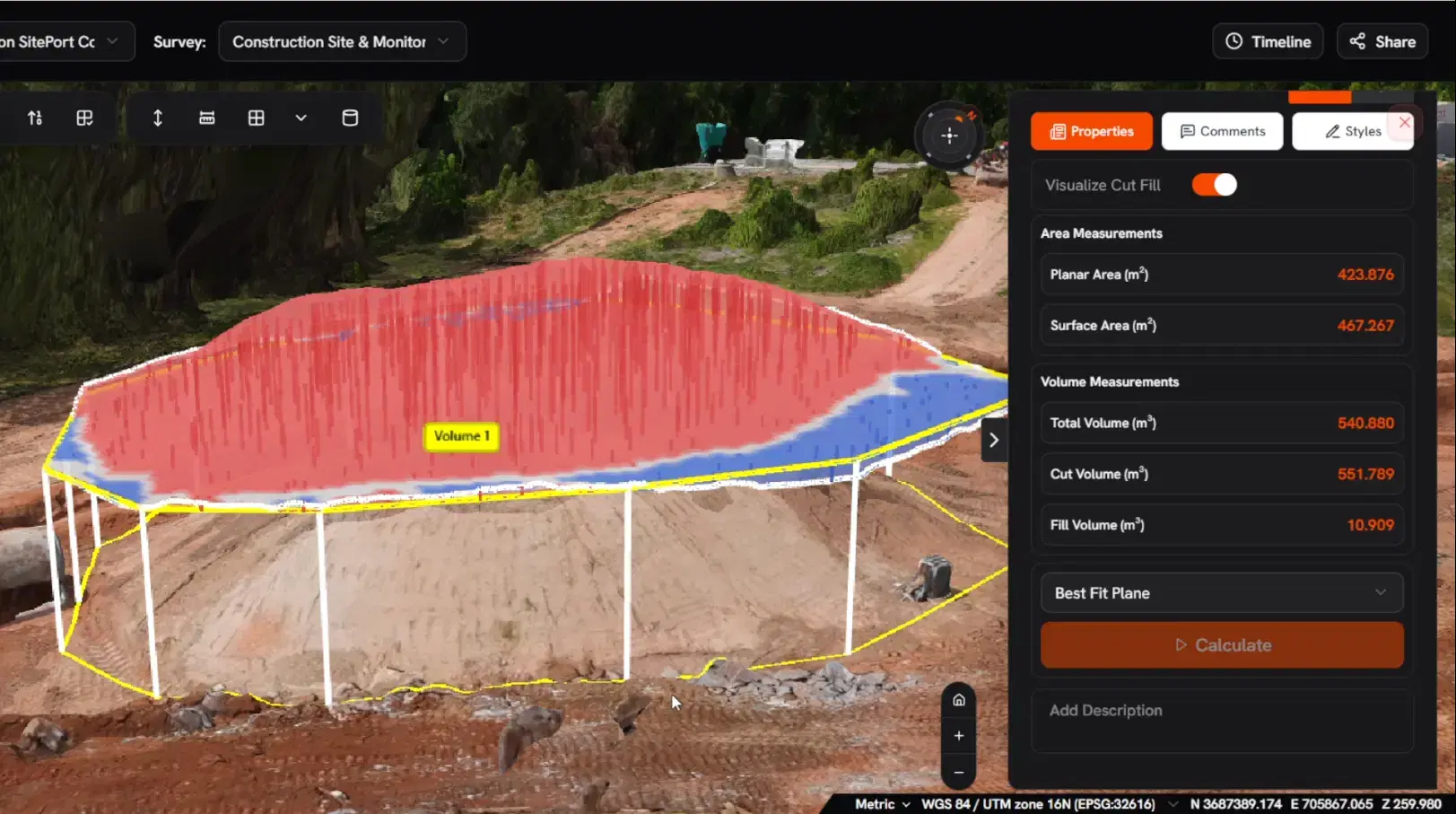
On the station box excavations and approach embankments included in the pilot scope, the team ran Aeroyantra's volumetric outputs alongside their conventional survey-based calculations. The numbers were close - and where they differed, the surface-to-surface comparison from the drone data gave a clear, visual explanation for the gap.
That traceability matters. When a volume figure is disputed - in a billing meeting, or a client review - having a georeferenced surface model to point to is a different kind of evidence than a spreadsheet interpolated from spot levels.
"The volumetric outputs have been more useful than I expected. We're not ready to rely on them exclusively - we're still cross-checking against our conventional surveys - but the level of detail you get from the surface model makes the numbers much easier to interrogate and defend."
Shashwat Mishra, Planning Manager, L&T - Patna Metro Rail Project
The planning report workflow is genuinely faster
Progress reporting for the client and for internal leadership reviews involves assembling photographs, volume tables, and progress annotations into a presentable document. On a large project, that compilation effort adds up.
The Aeroyantra outputs - annotated orthomosaics, volume tables, cut/fill maps - arrive ready to drop into a presentation. The team has not changed their reporting format, but the time it takes to fill that format with current data has come down noticeably for the zones covered in the pilot.
Where They Are Still Figuring Things Out
This is an honest pilot, not a wrapped-up success story. There are things the team is still working through:
Integrating drone data into the existing planning system. The outputs from Aeroyantra are clear and useful. The question of how they slot precisely into the formal planning and billing workflows - which formats, which review checkpoints, which sign-offs - is still being sorted out. Large EPC contractors have established processes for a reason, and changing those processes takes more than a promising pilot result.
Coverage of the full corridor consistently. The pilot has been running on select sections. Scaling to weekly coverage of the entire active corridor is operationally achievable - but it requires coordinating flight schedules with site activity, airspace, and weather across a more complex area. That coordination has not been fully optimised yet.
Building internal confidence in the numbers. The team is experienced surveyors and planners. Trusting a new method requires more than a few consistent results - it requires understanding why the numbers are what they are. That confidence is building, but it takes time.
Where Shashwat Thinks This Could Go
The potential that Shashwat's team sees is not just for the Patna Metro. Large EPC contractors run dozens of major infrastructure projects simultaneously. If a drone data workflow can genuinely improve planning accuracy and reporting efficiency on one metro corridor, the question becomes whether it scales - to other corridors on the same project, to other projects in the same portfolio, to planning workflows across the organisation.
"What we're doing here is small - one project, a few work fronts, a pilot scope. But if this proves out, the application is much bigger. A planning team managing ten projects in parallel, all getting weekly drone surveys, all with the same quality of site data feeding into the programme - that's a different level of planning visibility than most large EPC contractors have today. We want to see if we can get there."
Shashwat Mishra, Planning Manager, L&T - Patna Metro Rail Project
That is not a deployment story yet. But it is the right kind of ambition to be testing against.
Where Things Stand
The pilot is ongoing. Shashwat's team continues to run drone surveys on the Patna Metro corridor alongside their conventional workflow, building the comparison dataset they need to make a confident decision about broader adoption.
The early signals - coverage, volumetric accuracy, reporting speed - are positive enough that the question has shifted from does this work? to how do we make this work at scale inside our organisation? For a planning function at one of India's largest EPC contractors, that is a meaningful shift in how the question is being framed.
About Aeroyantra
Aeroyantra is a cloud-based drone data processing platform built for construction, infrastructure, and mining teams. The platform processes drone imagery into georeferenced orthomosaics, elevation models, volumetric reports, and annotated progress documentation - with no local hardware or specialist software required.
Planning teams on large infrastructure projects use Aeroyantra to measure earthwork volumes, track construction progress against programme, and generate client-ready reports on a regular survey cycle.
Running planning on a metro, highway, or large EPC project and want to try this on your site? Talk to our team - we're set up to support structured pilots for large contractor planning teams.
Related Articles
Explore more insights and stories from our blog
Drone Survey Case Study: Vedant x NALCO Odisha
How Vedant Construction replaced manual surveys with drone mapping at NALCO Odisha. 80% time savings, accurate stockpile volumes, faster reporting.
Drone 3D Mapping Case Study: Water Tank Bilaspur
How Travancore Aviations used drone photogrammetry to map an under-construction overhead water tank in Bilaspur. Accurate 3D model for construction planning.
Drone Mapping for Earthwork & Stockpile Volumes
Practical guide to drone mapping for earthwork and stockpile volume calculation. Methods, accuracy benchmarks, and best practices for mining and construction.